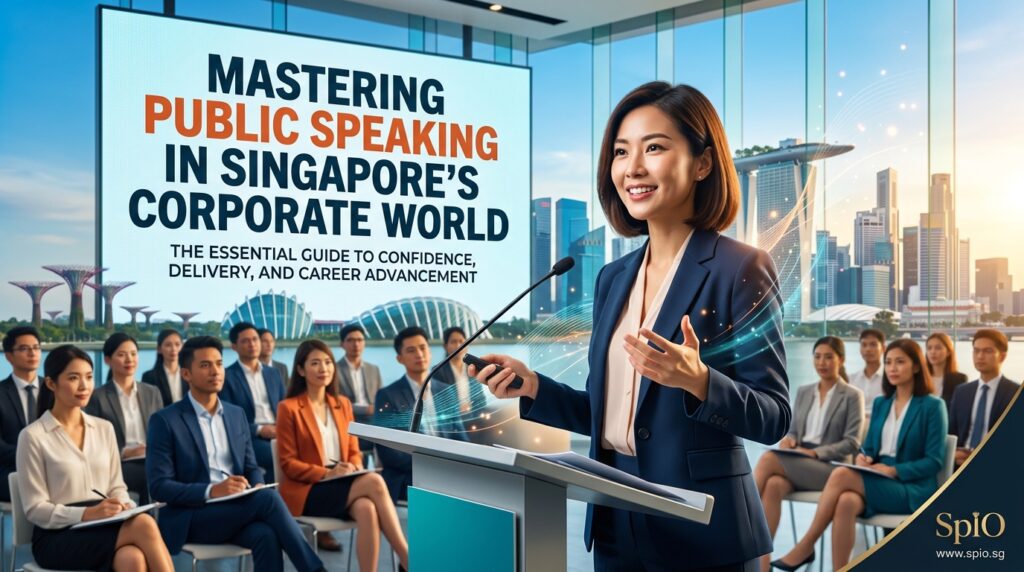
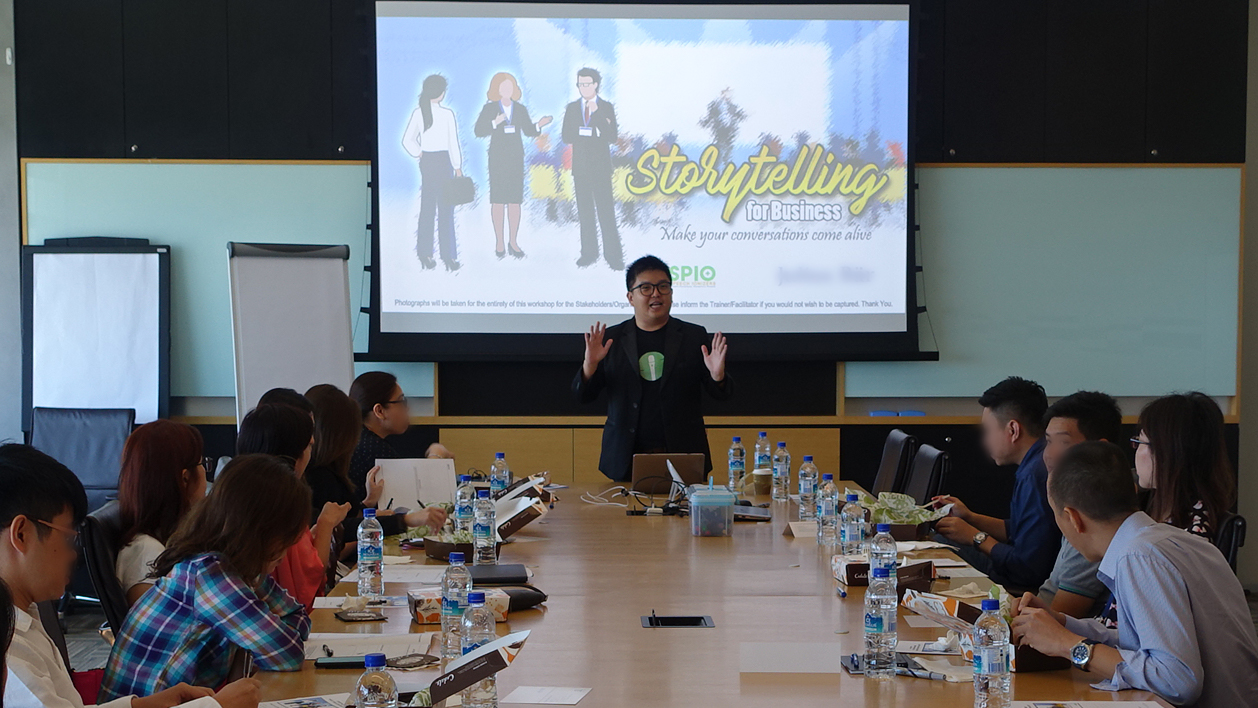
Public speaking is consistently ranked as one of the most feared activities in the world And learning how to improve your public speaking in the Singapore workplace is one of the most valuable investments any professional can make.
In Singapore’s fast-moving, high-performance business environment, your ability to speak clearly and confidently is one of the most important determinants of how far and how fast you advance.
Whether you are presenting to a boardroom, leading a town hall, pitching to investors, or simply speaking up in a meeting, your voice matters.
Why Learning How to Improve Your Public Speaking in the Singapore Workplace Matters
Singapore is a high-performance business environment. Professionals here interact with regional and global teams, present to demanding senior stakeholders, and are expected to communicate with precision across cultures and hierarchies.
Yet most professionals in Singapore, including many senior leaders, have never received structured communication training. They learned to present by watching others, by trial and error, or not at all.
The result: brilliant ideas are lost in poor delivery. Talented professionals are overlooked for promotion because they cannot command a room.
The good news: public speaking is a learnable skill. Like any professional competency, it can be developed systematically with the right training and practice.
Understanding Your Public Speaking Challenges
Before you can improve, you need to diagnose. Public speaking difficulties fall into several distinct categories and the fix for each is different.
Understanding your specific obstacles is the first step to knowing how to improve your public speaking in the Singapore workplace effectively.
1. Anxiety and Nervousness
The most common challenge.
Physical symptoms include a racing heart, shaky voice, dry mouth, and an inability to think clearly under pressure.
This is a physiological response – your brain perceives the audience as a threat. And it can be managed through specific breathing techniques, somatic anchoring, and structured exposure.
2. Poor Structure and Train of Thought
Some speakers can manage their nerves but lose their audience because their ideas are disorganised.
They jump between points, forget what they wanted to say, or struggle to land a clear message.
The fix here is structural: learning proven frameworks like the PREP method (Point, Reason, Example, Point) or the Problem-Solution-Benefit structure.
3. Weak Vocal Delivery
Monotone delivery, speaking too fast, poor projection, and excessive filler words (“um,” “uh,” “so”) are delivery issues that can be corrected through targeted vocal coaching.
These habits are usually unconscious. Most speakers don’t realise how they sound until they watch themselves on video.
4. Lack of Presence and Engagement
Some speakers know their content well and deliver it clearly, but still fail to engage the room.
This is an issue of presence – the ability to command attention, create energy in the room, and connect emotionally with the audience. It is the most advanced skill, and the most powerful.
The Five Foundations of Effective Public Speaking
Foundation 1: Clarity of Message
Every great presentation begins with a single, clear idea. Before you build any slides or plan any structure, ask yourself: What is the one thing I want my audience to remember?
In Singapore’s corporate environment, where time is precious and decision-makers are impatient, clarity is currency. A presentation that takes 20 minutes to make one clear point will always outperform a presentation that tries to cover 10 points in the same time.
Foundation 2: Audience-Centred Thinking
Most presentations fail because the speaker is thinking about themselves rather than what the audience needs to hear.
Before every presentation, ask: Who is in this room? What do they care about? What do I want them to feel, think, or do after I finish speaking?
In Singapore’s multicultural business context, audience-centred thinking also means being sensitive to hierarchy, cultural communication styles, and what different stakeholders define as “value.”
Foundation 3: Structured Delivery
Structure is often the missing piece for professionals trying to improve their public speaking in the Singapore workplace. Good ideas delivered without a clear framework rarely land with the impact they deserve.
A structured presentation is far easier to deliver and far easier to follow.
The most effective structure for business presentations:
Opening hook — a question, a surprising statistic, or a short story
Roadmap — tell the audience what you will cover
Body — your main content, organised into 2–4 clear sections
Call to action — what you want the audience to do or take away
Memorable close — end with a statement that resonates beyond the room
Avoid the most common mistake in Singapore corporate presentations: starting with lengthy background context before getting to the point. Senior decision-makers want your conclusion first, then your rationale.
Foundation 4: Confident Physical Presence
Research by Harvard Business School professor Amy Cuddy on power posture and confidence has been widely cited in leadership communication literature. Open, expansive postures reduce cortisol and increase confidence aligns with what SpIO observes in coaching practice.
Key principles:
Stand with feet shoulder-width apart, weight balanced — this grounds you and projects stability
Make deliberate, sustained eye contact with individual audience members (3–5 seconds per person)
Use purposeful gestures that reinforce your words — avoid fidgeting
Slow down — most nervous speakers speak too fast; deliberate pauses create emphasis
Foundation 5: Vocal Power
Your voice is your primary instrument. Key techniques:
Projection: breathe from your diaphragm for power and warmth without strain
Pace: slow your delivery by 20% from your conversational speed — it sounds confident to your audience
Variation: use changes in pitch, volume, and pace to create emphasis
Silence: a three-second pause before a key point creates anticipation and makes the point land harder
Practical Techniques to Manage Public Speaking Anxiety
Every professional who wants to improve their public speaking in the Singapore workplace will face a different set of challenges, but the five foundations above apply universally, regardless of industry, seniority, or experience level.
The 4-7-8 Breathing Technique
Before stepping up to speak: inhale for 4 counts, hold for 7 counts, exhale for 8 counts.
Repeat 3 times.
This activates the parasympathetic nervous system and physically reduces the stress response within 60 seconds.
Reframe the Narrative
Most nervous speakers tell themselves: “I’m going to embarrass myself.”
High-performance communicators tell themselves: “I have something valuable to share, and these people want to hear it.” The physiological symptoms of excitement and anxiety are almost identical.
The difference is the story you attach to them.
Preparation as Confidence
The single most reliable antidote to public speaking anxiety is thorough preparation.
Know your opening line cold. Know your key messages cold. Know your close cold.
The middle can flex, but your anchors should be automatic.
Public Speaking in Singapore’s Cultural Context
For anyone looking to improve their public speaking in the Singapore workplace, understanding the local cultural dynamics is just as important as mastering technique.
Hierarchy matters — senior leaders expect appropriate deference; get to the point quickly
Multiculturalism requires sensitivity — adapt your register and examples to your specific audience
Singlish is context-dependent — Standard Singapore English in formal or cross-cultural settings
Saving face is real — frame critical feedback constructively; avoid public challenges
When to Seek Professional Public Speaking Coaching
Self-improvement has real limits. Consider professional coaching when:
You have a high-stakes presentation or career moment approaching
You know your content but consistently underperform when you present it
You have received feedback that you lack executive presence or confidence
You are being considered for a leadership role requiring more visible communication
SpIO’s coaching begins with a Diagnostic Session – a structured assessment of your communication strengths and specific challenges. It is specifically designed for professionals who want to improve their public speaking in the Singapore workplace but aren’t sure where to start.
Unlike generic workshops, one-on-one coaching adapts to you: your personality, your industry, your specific high-stakes situations.